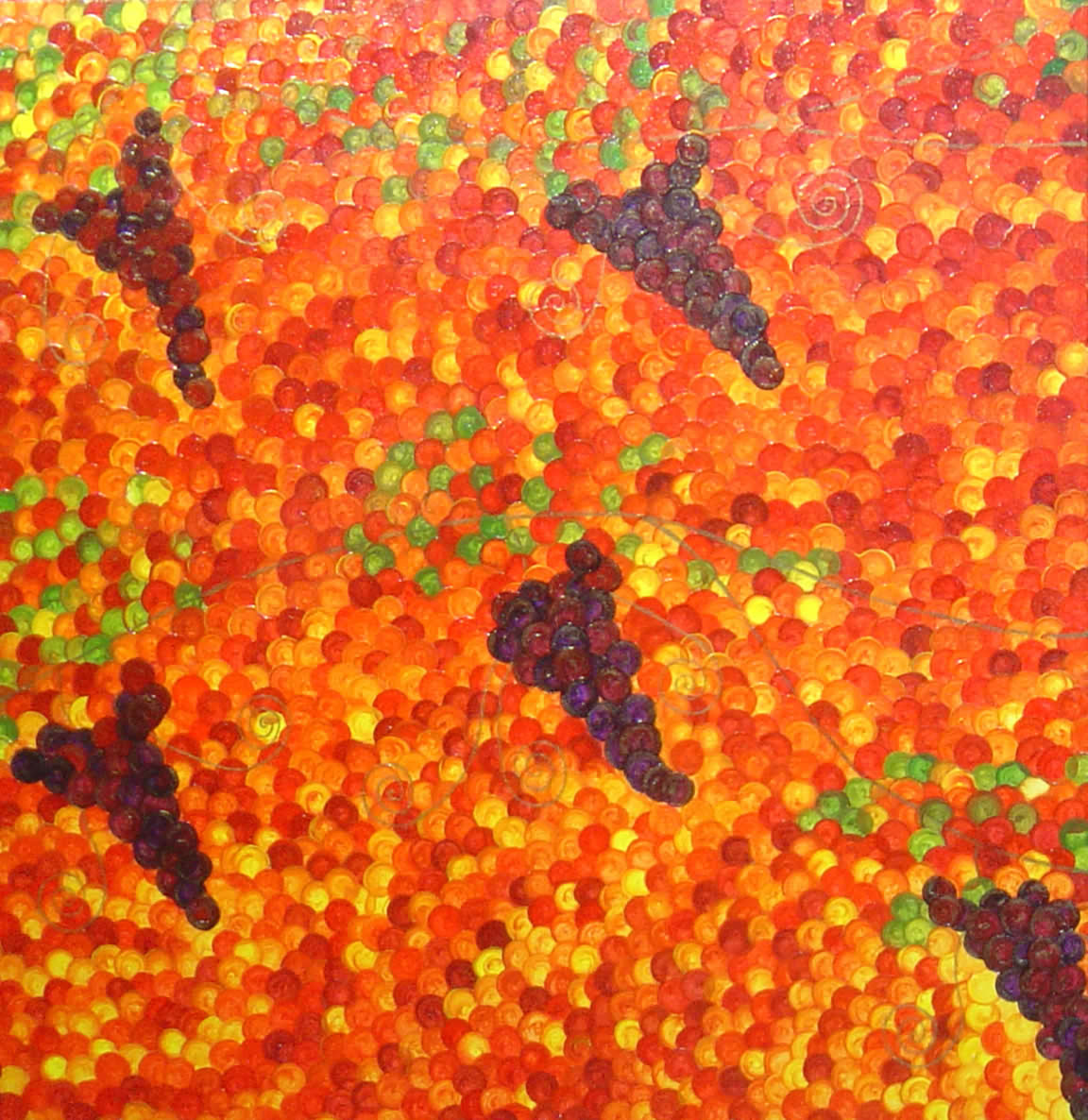
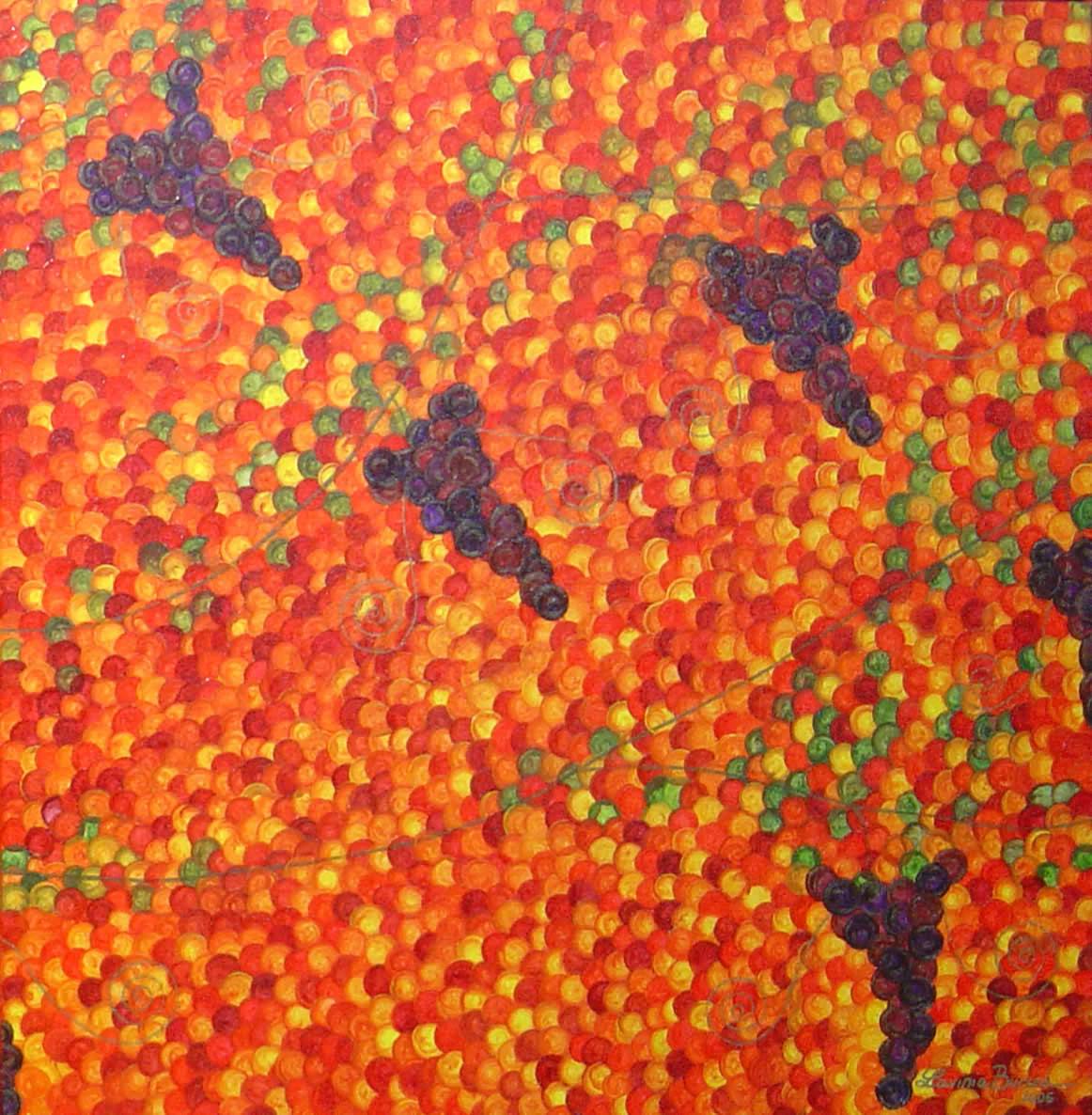
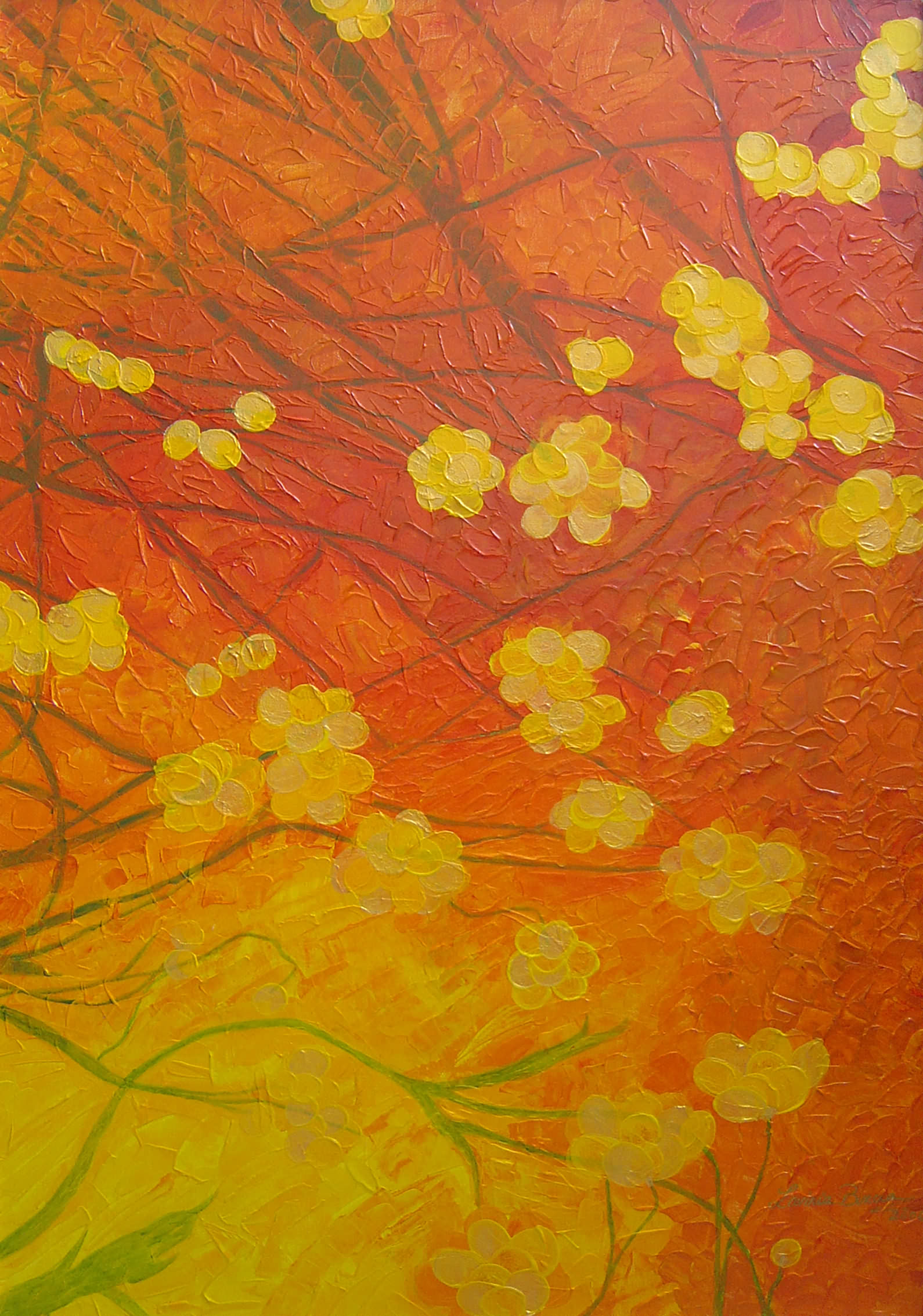
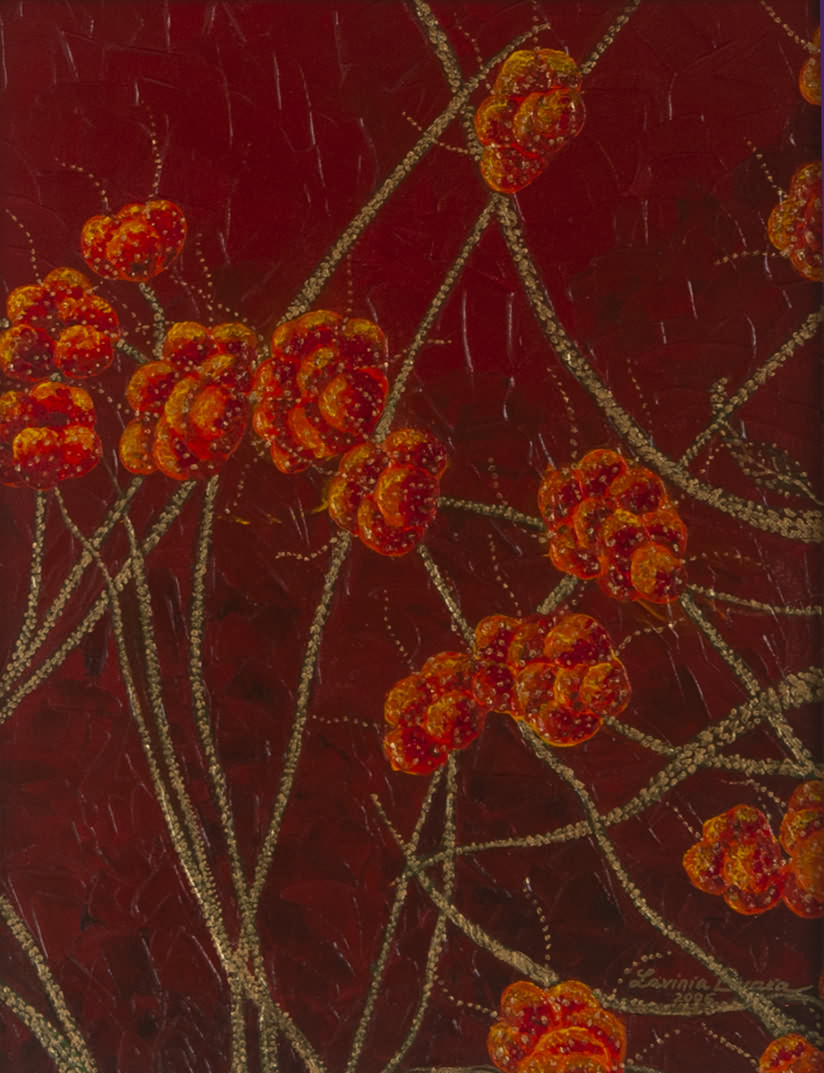
In Automne Chinois Series III, Lavinia intertwines her fascination with the cyclical nature of life and the rich traditions of Chinese culture, which have profoundly influenced her since moving to Asia. This painting captures the spirit of autumn through the lens of Chinese festivals, where nature and celebration converge in a dance of light and color. The flowers and stalks dominate the composition, much like the symbolism of blooming life amidst the deep cultural significance of the autumn season.
The spatial dynamic within the painting is one of contrast and harmony. The bold textures of the background, created with short, broken, and spontaneous knife strokes, vibrate with energy, reminiscent of the vibrant excitement felt during the Mid-Autumn Festival or Chinese New Year. This background, irregular and intense, echoes the atmosphere of celebration, where the air is thick with anticipation and the spirit of renewal. The strokes, full of movement and life, reflect the agitated motion of festive energy, creating a sense of depth and vitality that pulls the viewer into the moment.
Amidst this energized backdrop, the flowers emerge as luminous focal points, their spherical forms radiating a soft, magnetic glow. These blossoms, with their rich, juicy appearance, symbolize the fullness and richness of life—much like the harvests celebrated in Chinese traditions. Some flowers, catching muted light, appear translucent, as if imbued with the spiritual essence of the season. They shimmer against the bold background, their gentle radiance a metaphor for the delicate balance between life’s moments of stillness and bursts of vibrant energy.
The stalks, angular and diagonal, introduce an element of dynamism that contrasts with the flowers’ softness. This tension, between the sharpness of the stalks and the tenderness of the blooms, mirrors the balance of opposites often seen in Chinese philosophy — yin and yang, action and stillness, celebration and reflection. The stalks guide the viewer’s eye across the canvas, weaving through the composition like pathways through a landscape, inviting contemplation of the deeper meaning behind nature’s cycles.
This series embodies not only the visual beauty of nature but the profound cultural meanings tied to the season of autumn in Chinese tradition. The grading of colors within the atmosphere reflects the ever-shifting energies of the world, where light and shadow play upon the surface like fleeting moments of joy and reflection during festivals. The translucent effect of the flowers and their interaction with the bold background creates a mysterious spiritual tension, much like the tension one feels in the air during these special celebrations, where the past, present, and future seem to converge.
Automne Chinois Series III is a celebration of life, movement, and spiritual resonance. It evokes the feeling of excitement during the festive seasons, where the atmosphere is charged with a deep connection to the cycles of the earth and the universe. It captures that intangible moment of transformation, when nature's blossoms reflect both the beauty of the moment and the fleeting nature of time, much like the glowing lanterns that light the skies during the Mid-Autumn Festival, illuminating the night with their delicate, ephemeral glow.
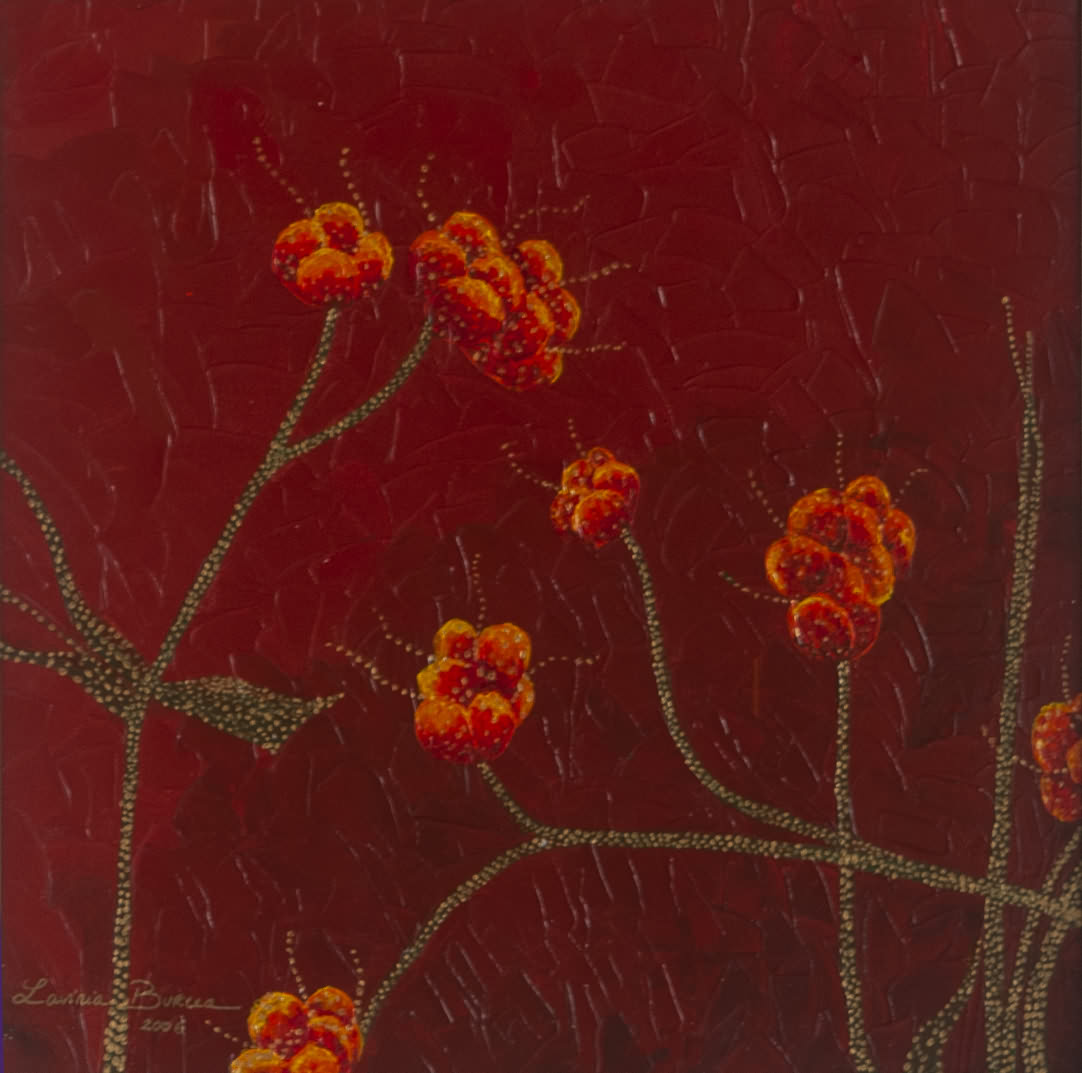
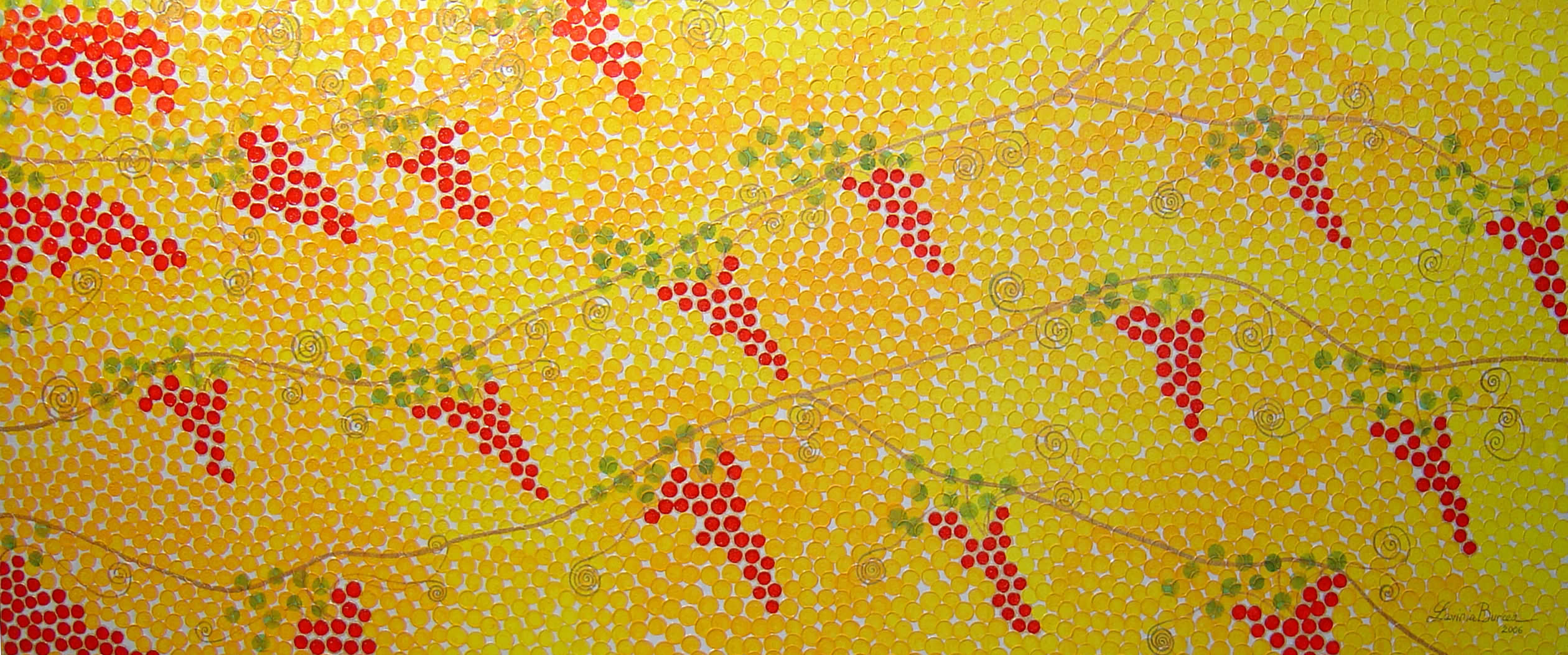
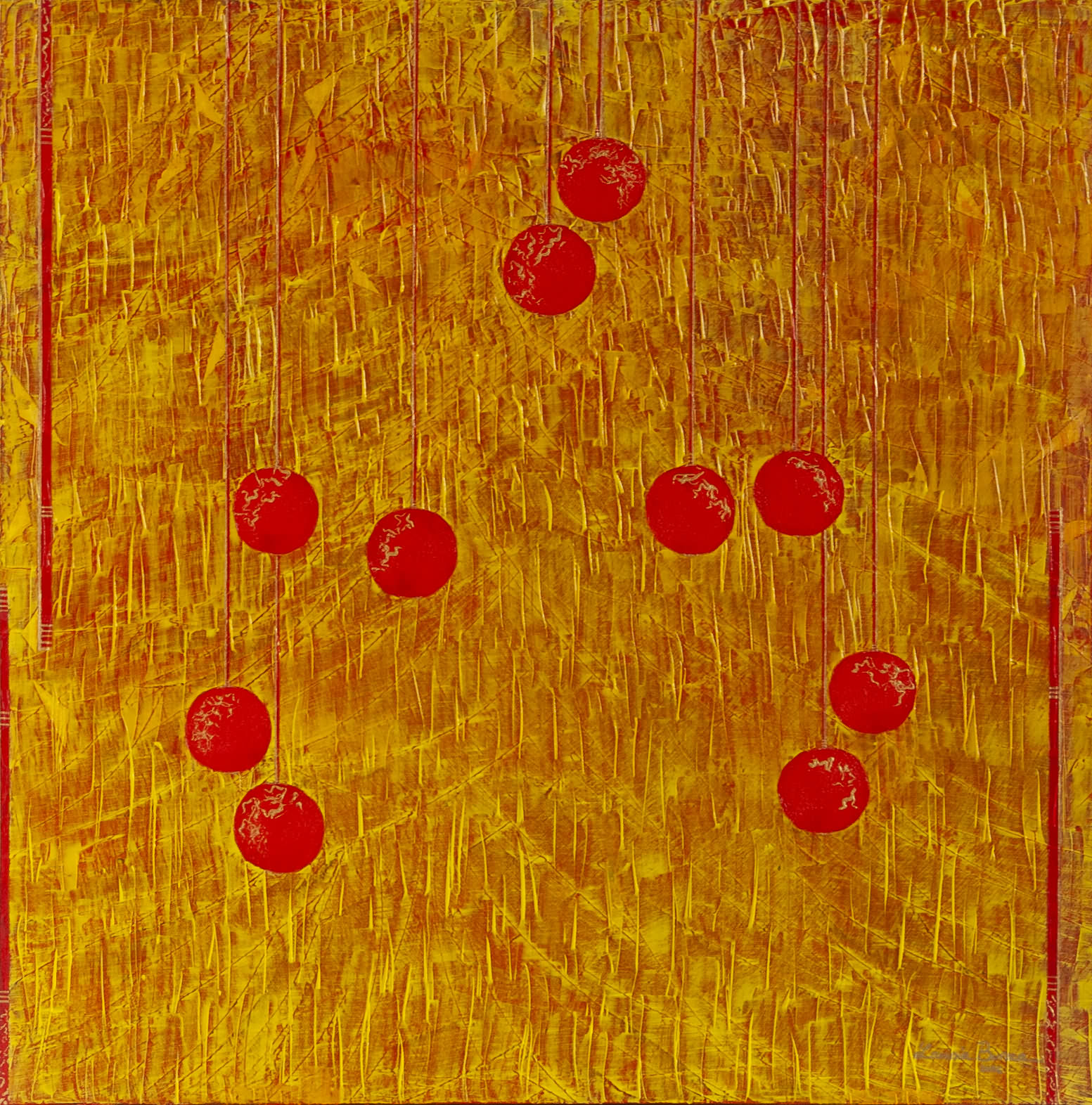
In Mid-Autumn Festival, Lavinia captures the spirit of one of China’s most beloved traditions, where the season’s abundance and togetherness are celebrated under the bright harvest moon. The painting reflects the vibrant energy of the festival, with glowing lanterns and symbolic elements that convey both the warmth and sacredness of the occasion. The translucent yellow background, layered delicately over a rich red underpainting, creates an ethereal, glowing effect, as if the light of the full moon is illuminating the entire scene.
The red beneath the yellow symbolizes protection and good fortune — central themes in Chinese culture — while the yellow that radiates through represents the energy of the festival, the richness of the harvest, and the warmth of community gathering. This dual layering of color creates a subtle interplay between the seen and unseen, much like the festival itself, where the full moon casts both light and shadow, revealing the deeper meanings behind the celebratory rituals.
The focal point of the painting is the bright red lanterns and chopsticks, which stand out against the glowing background. The red of the lanterns, highlighted with swirls of gold, symbolizes the festive spirit, protection from bad fortune, and the guiding light that leads families and friends together. The delicate gold circles on the lanterns shimmer like distant stars or grains of light, adding a mystical, almost dreamlike quality to the composition. The chopsticks, held aloft in the act of sharing, represent the communal feasts that are central to the Mid-Autumn Festival, where the harvest is honored and prosperity is celebrated.
The translucent yellow, which overlays the red, adds a sense of movement and warmth, as if the energy of the gathering is diffused through the air itself. This glowing effect mimics the way lanterns light up the night sky during the festival, filling the atmosphere with both light and hope. The triangular shapes within the composition suggest pagoda roofs, symbolizing cultural tradition and the endurance of rituals passed down through generations. These shapes lend the painting a sense of structure, grounding the vibrant energy of the festival within the context of ancient customs.
Lavinia’s brushwork brings an expressive dynamism to the scene. The bold, quick strokes of the translucent background contrast with the more defined forms of the lanterns and chopsticks, creating a harmonious balance between spontaneity and tradition. The use of gold to highlight the lanterns and other elements further emphasizes the theme of prosperity and longevity, while the underlying red serves as a protective force, grounding the spiritual energy of the festival.
Though the customs of dragon dances, incense burning, and tree planting are not visually depicted, their presence is felt in the painting’s energy. These traditions linger in the atmosphere, like the scent of incense carried on the wind or the shadow of a dragon moving in the firelight. The entire composition vibrates with the festive rhythm of the Mid-Autumn Festival, where the harvest moon oversees a moment of reflection, gratitude, and shared joy.
Mid-Autumn Festival is more than a depiction of a cultural celebration—it is an exploration of light, energy, and the deep connections that bind people together. Lavinia invites the viewer to experience the festival’s warmth and vibrancy, where the cycles of nature and human connection converge in a glowing harmony, much like the lanterns that fill the night sky.

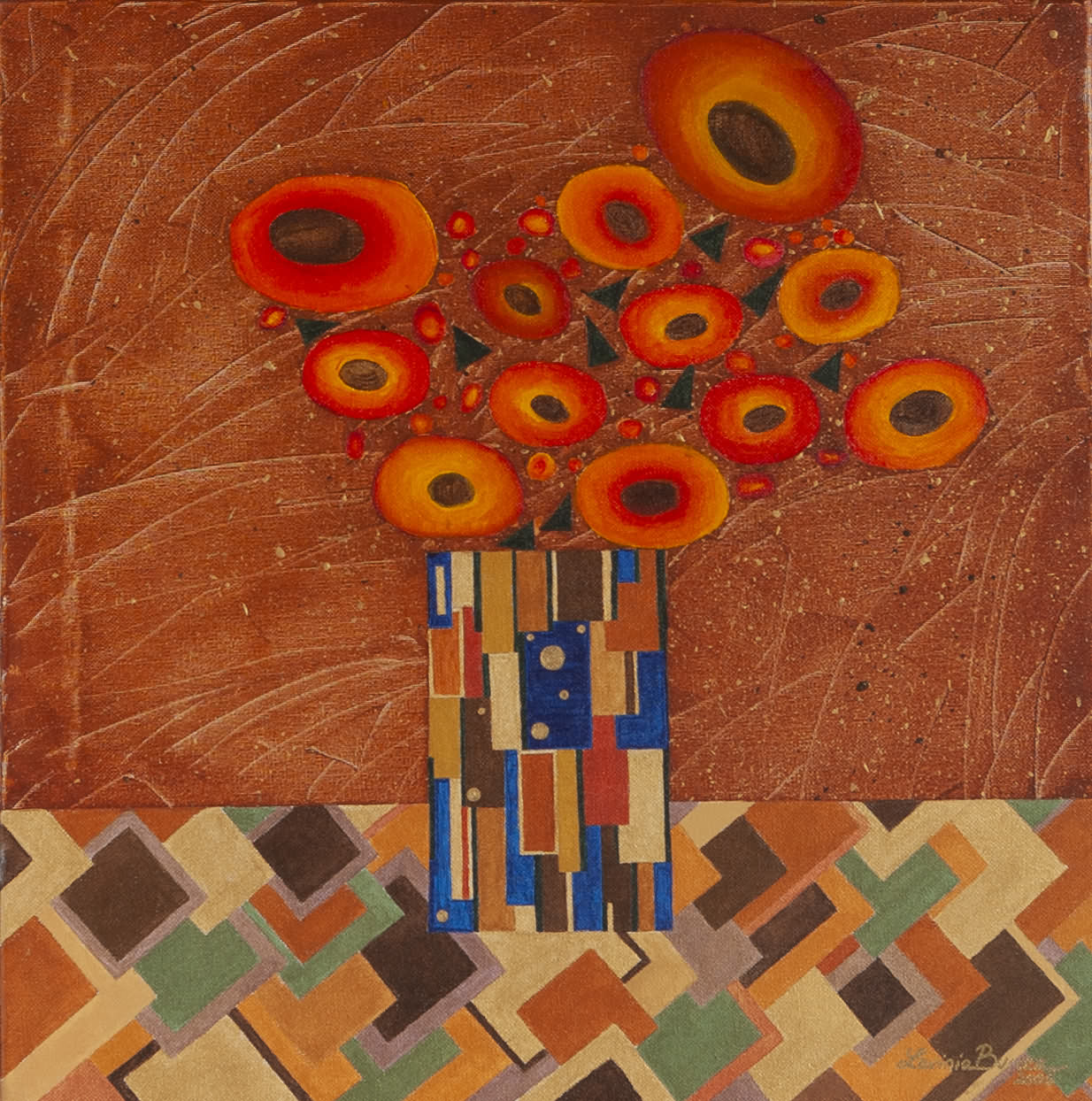
In L'Automne Bouquet I, Lavinia captures the rich, earthy warmth of the autumn season in a bold, abstract expression of a bouquet. The vibrant oranges and deep reds of the flowers evoke the feeling of the season’s bounty, a time when nature reaches its peak and offers its most radiant hues. Each flower, represented in circular forms—Lavinia's signature Circleism technique—appears as a burst of energy, as though they are not just objects but representations of life’s cycles, continually renewing and transforming.
The angular, geometric vase at the center of the composition contrasts sharply with the fluidity of the bouquet, creating a tension between the organic and the structured. The vase, rendered in a mosaic of warm browns, blues, and earth tones, mirrors the geometries of the season, where nature and human constructs coexist. The earthy brown background, textured with spontaneous strokes, heightens the bouquet’s intensity, making the flowers seem to pop from the canvas with an otherworldly glow.
As part of the L'Automne Collection, this painting symbolizes abundance, warmth, and the cyclical nature of life. The bouquet stands as a metaphor for the fruits of the season—rich, fleeting, and symbolic of the eternal renewal that autumn represents.
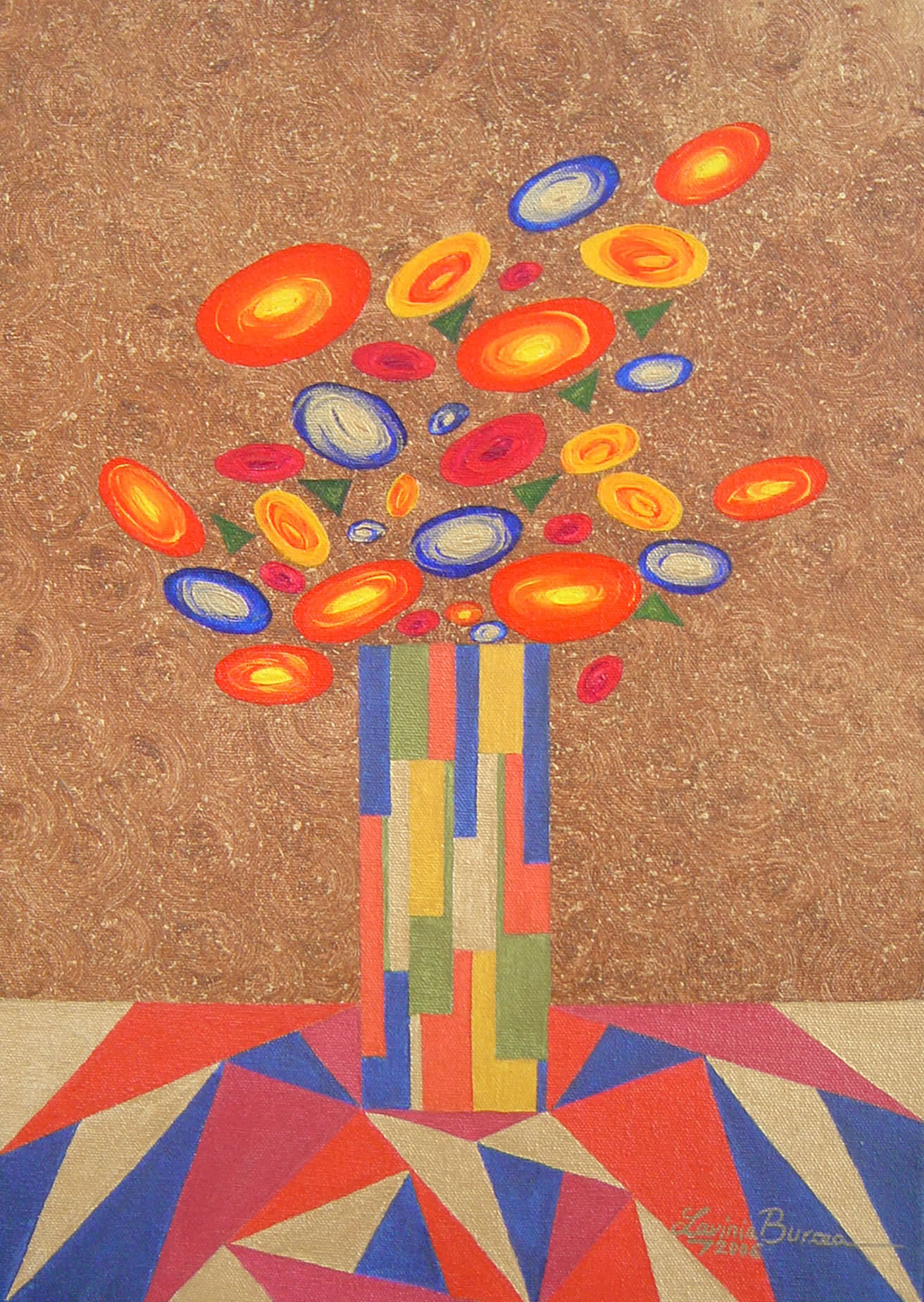
In L'Automne Bouquet II, Lavinia explores a more vibrant and dynamic interpretation of the autumn season, continuing her exploration of floral abstraction. The bouquet is rendered with bold, circular shapes — representing both flowers and the cyclical essence of life — set against a richly textured background of swirling patterns. The bright yellows, oranges, and reds dominate the bouquet, suggesting the warmth and richness of autumn, while the cool blues and greens add balance, representing the remnants of summer fading into memory.
The geometric vase is an extension of the vibrant palette, consisting of bright, intersecting blocks of color that create a stark contrast with the more muted background. This duality between the organic, swirling forms of the bouquet and the rigid geometry of the vase symbolizes the relationship between nature’s spontaneity and human control — suggesting that while we may attempt to contain the beauty of the natural world, it always overflows with life and energy.
The floor beneath the vase, composed of angular, geometric shapes in deep reds, blues, and golds, mirrors the dynamic energy of the bouquet above. It grounds the composition, offering a sense of balance and harmony, even amidst the explosion of color and form.
In the context of the L'Automne Collection, L'Automne Bouquet II represents the vibrancy of autumn's final moments — an explosion of color and life before the season fades into winter. It’s a celebration of abundance and beauty, a reminder of the fleeting yet powerful energy that comes with change and transition.
Both L'Automne Bouquet I and L'Automne Bouquet II reflect Lavinia’s deep connection to the cycles of life and nature, particularly the transitionary beauty of autumn. Through the use of her Circleism technique, she captures the essence of the season’s richness and abundance. The circular forms symbolize the eternal cycles of life, while the geometric vases and backgrounds provide a sense of balance, suggesting the harmony between nature’s organic beauty and human creativity.
In these paintings, autumn is not merely represented by falling leaves or bare trees but through the metaphor of a bouquet — a collection of nature’s most beautiful offerings, gathered and arranged before they fade away. The warmth and intensity of the colors reflect the height of the season, while the structured vases hint at the inevitability of change and the role of human intervention in shaping our experience of nature.
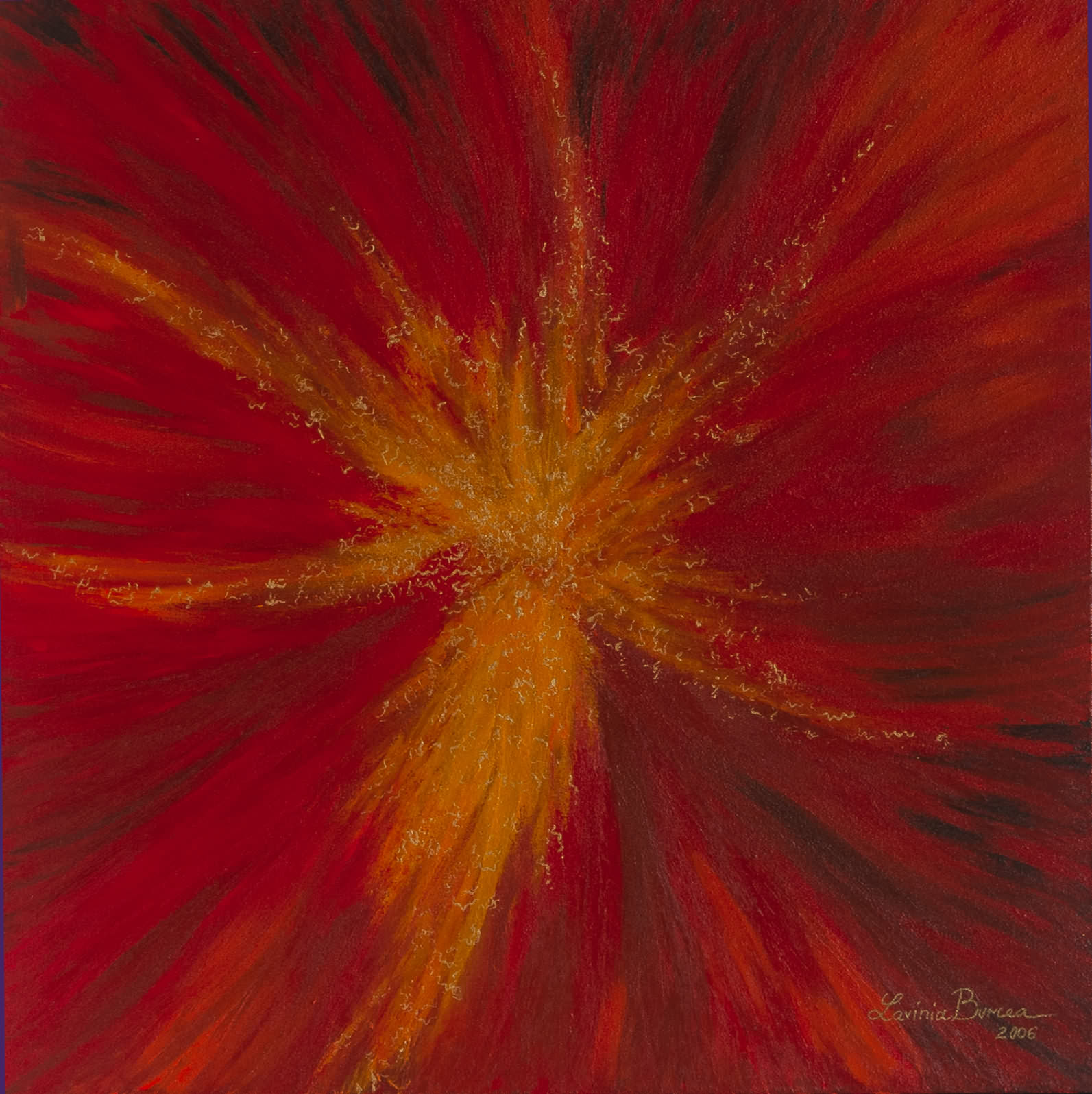
Autumn Scent captures the ephemeral, intangible essence of the season — where the scent of leaves, trees, and rain mingles with the crisp air, carrying with it the soul of autumn. In this painting, the sensation of scent transcends the boundaries of the canvas, as if it cannot be contained by the physical world. It rises and swirls, filling the air with a fragrance that evokes the earth's quiet transformation. The scent becomes more than a sensory experience; it is a bridge between the seen and unseen, connecting us to the cycles of nature, much like the changing seasons themselves.
The painting’s composition — bands of red, brown, yellow, and swirls of gold — follows a passionate, diagonal rhythm, creating a visual symphony that mirrors the way scent moves through space. Each stroke seems to represent the fleeting, spontaneous nature of scent, carried by the wind, free to roam beyond the edges of the canvas. The reds and browns speak to the richness of the fallen leaves, while the interspersed yellows and golds evoke the warm sunlight filtering through the trees. These harmonious bands of color converge at the center of the canvas, a focal point where the essence of autumn’s fragrance seems to ignite, before expanding outward, as though the scent itself is overflowing beyond the finite space of the painting.
The technique used is passionately expressive, capturing the density and unpredictability of autumn weather. The layers of color mimic the way the earth releases its fragrance after a rain, a scent that is both grounded in the present moment and tied to the eternal cycles of life. The scent of autumn is not just something we experience — it is a reminder of the passage of time, of nature’s cycles of renewal and decay. In this painting, scent becomes a metaphor for the unseen forces that shape our world, moving through the air like whispers from the earth, carrying the essence of life’s quiet transformations.
The scent flows across the canvas, much like the unseen energies that move through nature. It is a manifestation of change — just as autumn itself represents the transition between life and dormancy. The swirling golds and the dynamic meeting of colors reflect the moment when the scent of earth and rain saturates the air, reminding us that even in the quietest of moments, there is life, movement, and transformation. The scent of autumn, captured in this painting, is not just a fragrance; it is the breath of the earth itself, carrying with it the stories of the seasons and the endless cycle of growth, death, and renewal.
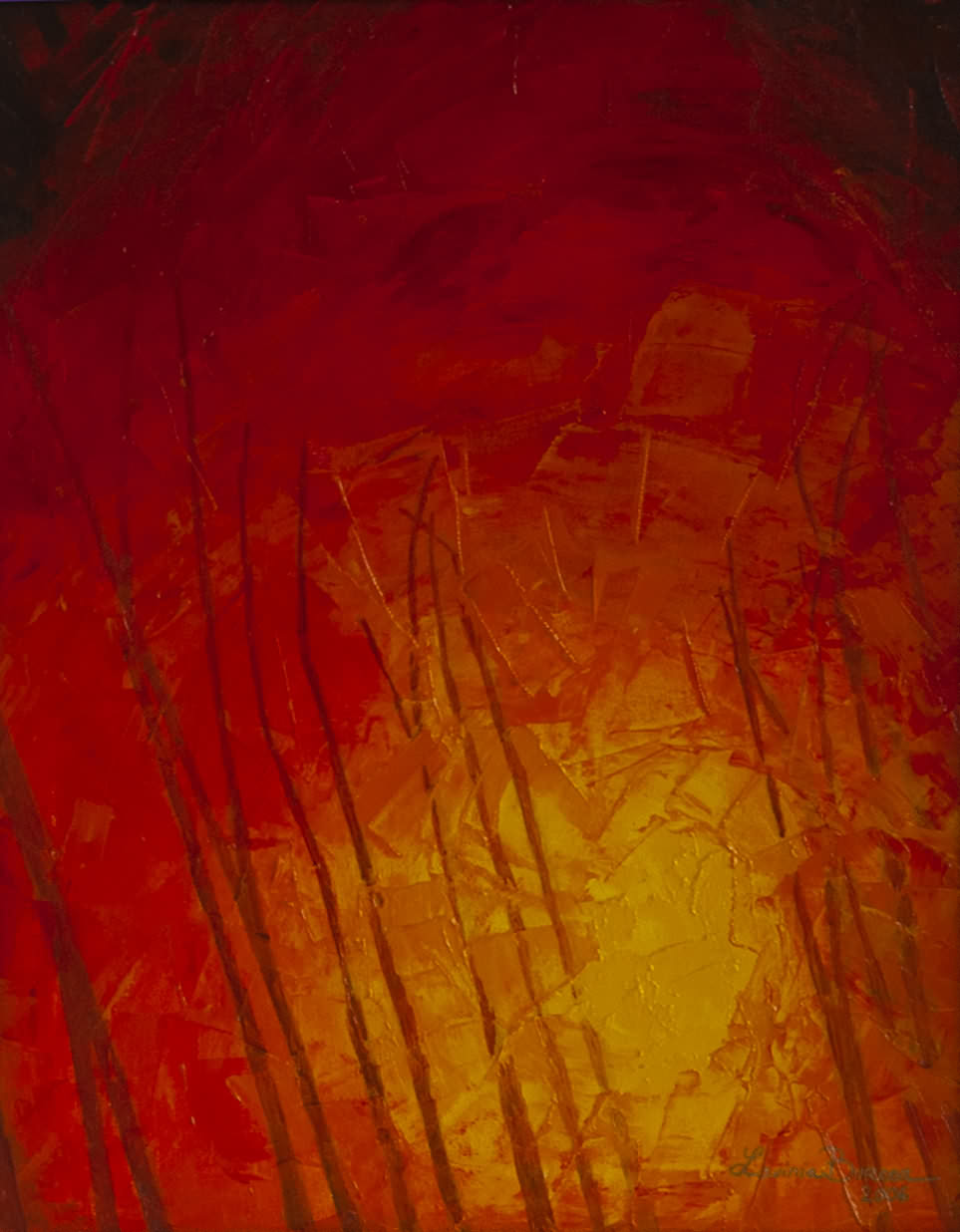
In Autumn Sunset, Lavinia captures the powerful yet fleeting beauty of the setting sun in the autumn season. The painting is bathed in rich, warm tones — deep reds, fiery oranges, and radiant yellows — evoking the essence of the season's final moments before dusk settles in. The bold strokes and textured layers create a sense of movement, as if the trees and sky are ablaze with the last light of day.
The sun, though abstracted, is at the heart of the composition, glowing intensely in the center, casting its light through the tall, dark silhouettes of trees that reach upward. These vertical lines seem to pierce the fiery sky, as if nature itself is preparing for the approaching darkness. The sharp contrast between the radiant glow and the encroaching shadows reflects the transition between day and night, as well as the shift from the fullness of autumn to the stillness of winter.
The rough, dynamic texture of the painting adds to its energy, giving the viewer a sense of the intensity and heat of the sun as it sets. The layers of paint, applied with strong, sweeping strokes, create an almost tactile quality, inviting the viewer to feel the warmth of the setting sun and the coolness of the shadows that follow. The vertical lines of the trees offer a rhythmic structure to the composition, balancing the chaos and passion of the sky with the quiet strength of the forest.
In the context of the L'Automne collection, Autumn Sunset represents the final moments of the season — a time of both reflection and anticipation. The glowing sun, in its descent, symbolizes the passage of time and the inevitable cycle of life, while the darkening forest reminds us of the coming winter and the beauty that lies in the transitions of nature.
Autumn Sunset is a vibrant expression of the transient beauty of autumn’s end, where the warm, fiery palette reflects both the glory and the impermanence of the season. The abstract, textured approach invites the viewer to contemplate the emotional and spiritual impact of the sunset, as well as its symbolic meaning in the cycle of life. The boldness of the colors and the strength of the vertical lines provide a sense of balance, capturing both the energy and calmness of nature as it prepares for the inevitable darkness. The painting is both a celebration of light and a quiet acknowledgment of its passing.
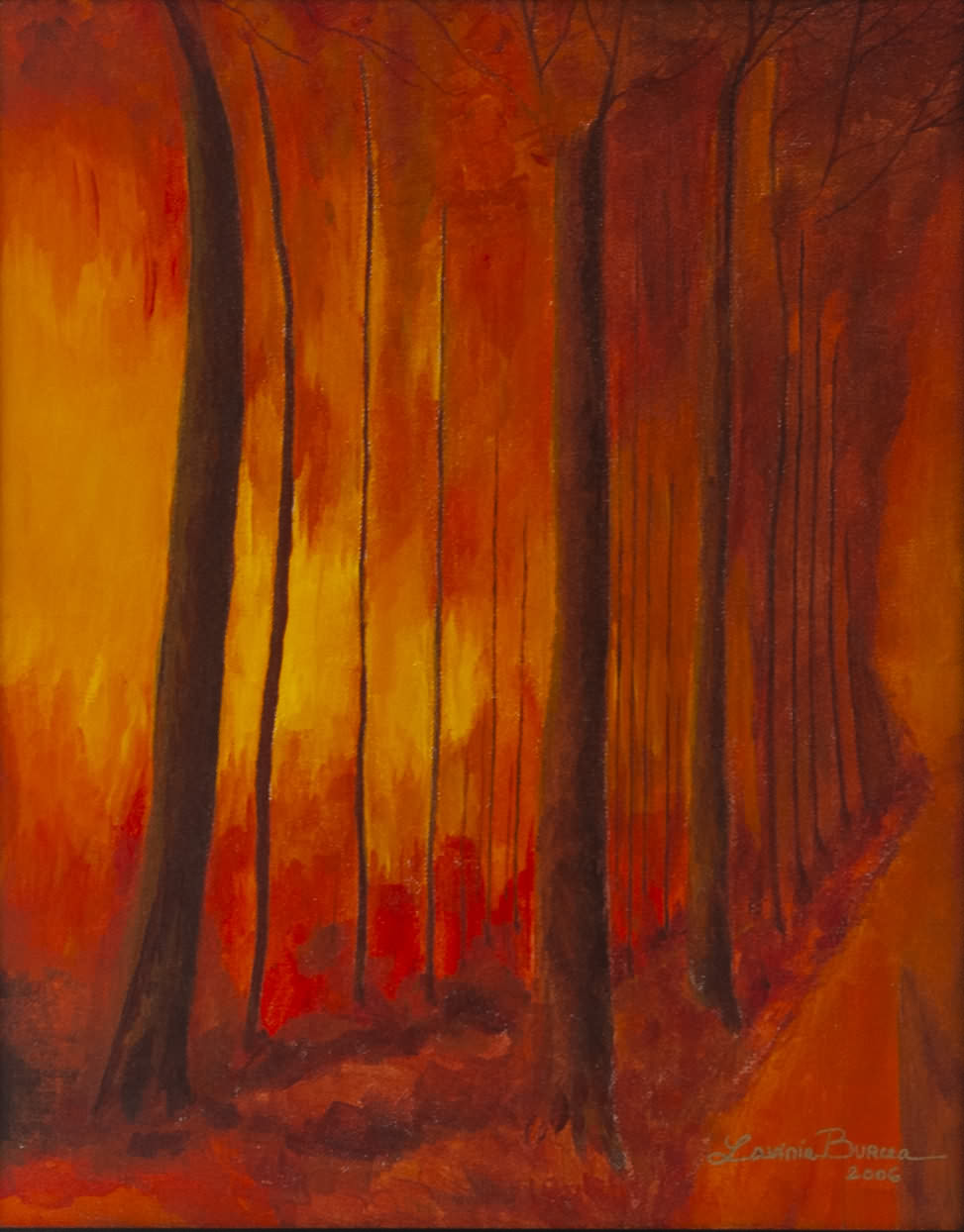
In Passage, Lavinia evokes the transformative power of autumn as both a season and a metaphor for life’s transitions. The painting captures a forest engulfed in the warm, golden hues of autumn, where towering trees stand like silent sentinels, guiding the viewer along a mysterious, glowing path. The deep reds and fiery oranges conjure the essence of autumn in its peak—vivid and intense—while the elongated shadows cast by the trees suggest the lengthening of days as the season shifts toward winter.
The title Passage suggests not only a physical movement through the forest but also a metaphorical journey, a crossing from one phase of life to another. The trees, standing tall and dark against the glowing backdrop, symbolize strength and endurance, while the path between them invites the viewer to walk through, offering a sense of both solitude and direction. It represents the passage of time, a reminder of the inevitable transitions we must face in life—marked by both beauty and melancholy.
The warm palette of the painting reflects the richness of autumn's final moments before the cold sets in, a fleeting brilliance that must be cherished. The vertical lines of the trees create a sense of stability, anchoring the viewer amidst the fiery, dynamic colors, while the receding path invites contemplation. There is a certain quietness in the scene, as if nature is pausing, waiting for the viewer to take the next step.
In the context of the L'Automne collection, Passage embodies the themes of change, introspection, and transformation. Autumn, with all its beauty and decay, serves as a mirror for our own journeys—highlighting the impermanence of life but also the promise of renewal that lies beyond.
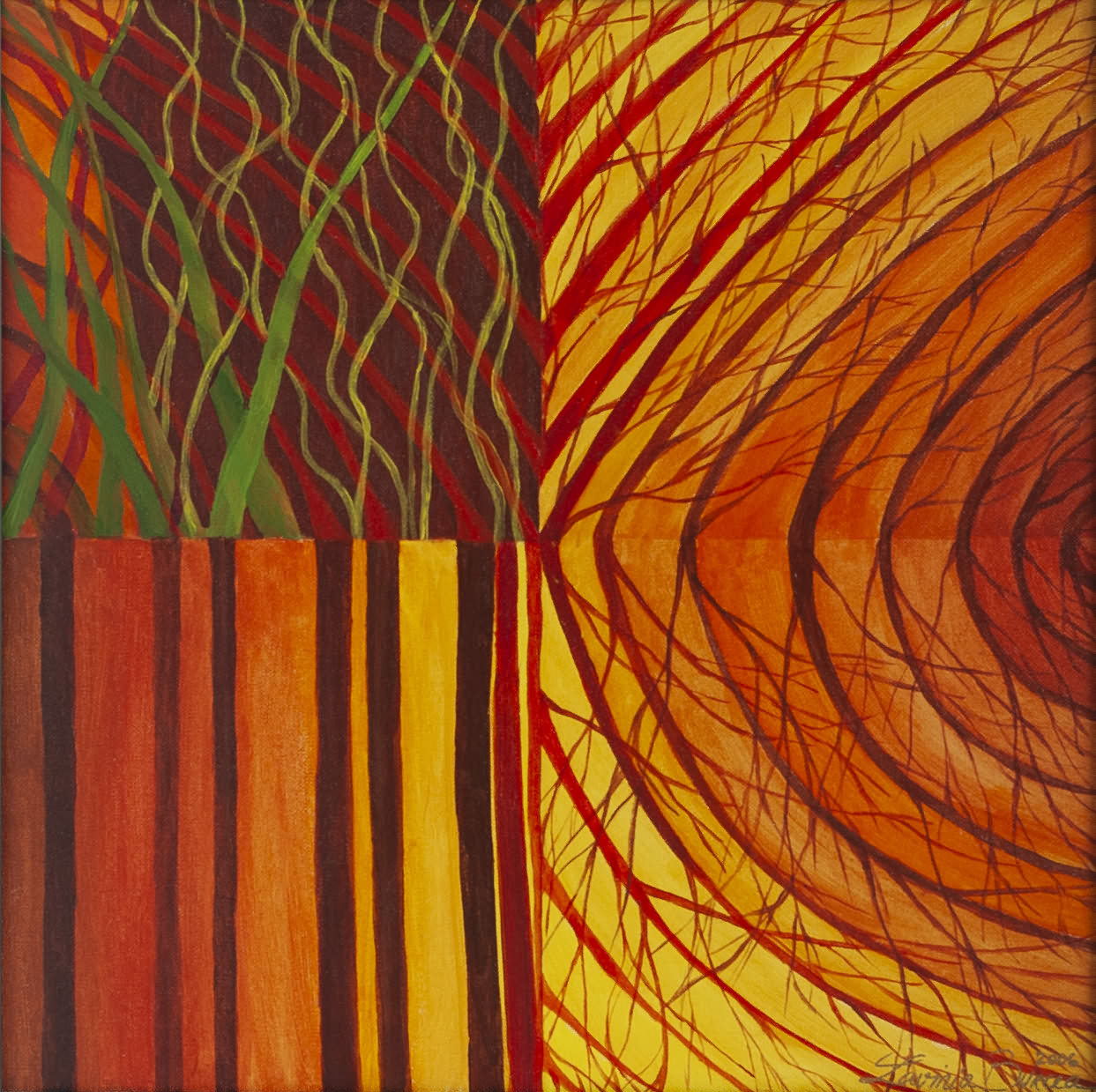
Inspired by the Mayan Sacred Tree, Wacah Chan, this painting embodies the eternal cycles of human civilization and the cosmic forces that bind us to the earth and the heavens. The tree, a powerful symbol of life, growth, and knowledge, is divided into three essential realms: the roots, the trunk with its branches, and the expansive foliage. These three parts, connected in a continuous cycle, represent the sacred rhythm of life, knowledge, and existence.
The eye is guided in an anti-clockwise motion, beginning with the roots in the bottom left. The roots are not merely physical anchors but represent the ancient wisdom and knowledge held by the indigenous peoples of the Earth — the keepers of the Wacah Chan, the world tree. These straight, vertical lines suggest depth and strength, rooting the tree in the spiritual truths that have sustained humanity across millennia. They remind us that we cannot sever the roots of truth without disrupting the entirety of life’s delicate balance. The roots are the foundation of civilization, the silent keepers of sacred wisdom that ensure continuity through the winters of human existence.
As the eye moves towards the trunk, we encounter the semi-circular form that represents the transmutation of cosmic knowledge into the tangible world. This trunk and its branches are not just the structure of the tree but are the conduits of divine understanding, the bridge between the ancient truths buried deep in the roots and the unfolding knowledge of the heavens. The branches extend outward, their lines intermingling with the sky, signifying the connection between the earthbound and the celestial. They reach out as though seeking to grasp the infinite mysteries of the cosmos, while simultaneously carrying the wisdom from below upwards into new realms.
The foliage, in vibrant greens, represents the leaves — the cycles of life that come and go with the seasons, like the generations of humanity. Each leaf radiates a harmonic frequency, transmitting the energy of the universe through the tree, acting as a continual reminder of the eternal, sacred rhythm of life. These leaves, however temporary, carry the force of creation, growth, and renewal. The green leaves, set against the dark branches and trunk, symbolize humanity’s ability to resonate with the universal forces of creation. Yet, like all life, they are transient, falling with the passing of time, only to return again in a never-ending cycle of renewal.
At its core, this painting reflects the idea that humanity is like a living tree — ever-changing, shedding, and renewing, but always grounded by the deep roots of ancient wisdom. The Wacah Chan serves as a reminder that though civilizations rise and fall, the roots of truth endure. The roots preserve what is sacred, what is true, and they survive the winters of ignorance and turmoil, awaiting the spring when the tree, and all that it represents, can bloom once again.