The painting titled Lavender Scent features a vibrant and soothing palette dominated by various shades of purple and lavender, evoking the gentle and calming essence of lavender flowers. The swirling, dynamic brushstrokes give a sense of movement, almost as if the scent of lavender is being carried through the air, creating a visual metaphor for the fragrance.
The composition suggests an abstract interpretation of the lavender plant, with curving lines that seem to radiate outward, symbolizing the diffusion of its aroma. The delicate use of darker purple tones adds depth, suggesting the intricacies of nature, while the softer lavender hues evoke feelings of tranquility and relaxation. The painting’s overall energy is both calming and expressive, capturing the gentle and subtle nature of lavender’s scent through a harmonious, flowing design.
The fine detailing in the center suggests clusters of lavender petals or the texture of the plant, grounding the painting with organic shapes while the outer, sweeping strokes seem to symbolize the ethereal and expansive nature of scent, drifting and spreading into the air. The balance between abstraction and nature reflects a delicate, sensory experience, inviting viewers to imagine the fresh and fragrant aroma that inspired the artwork.
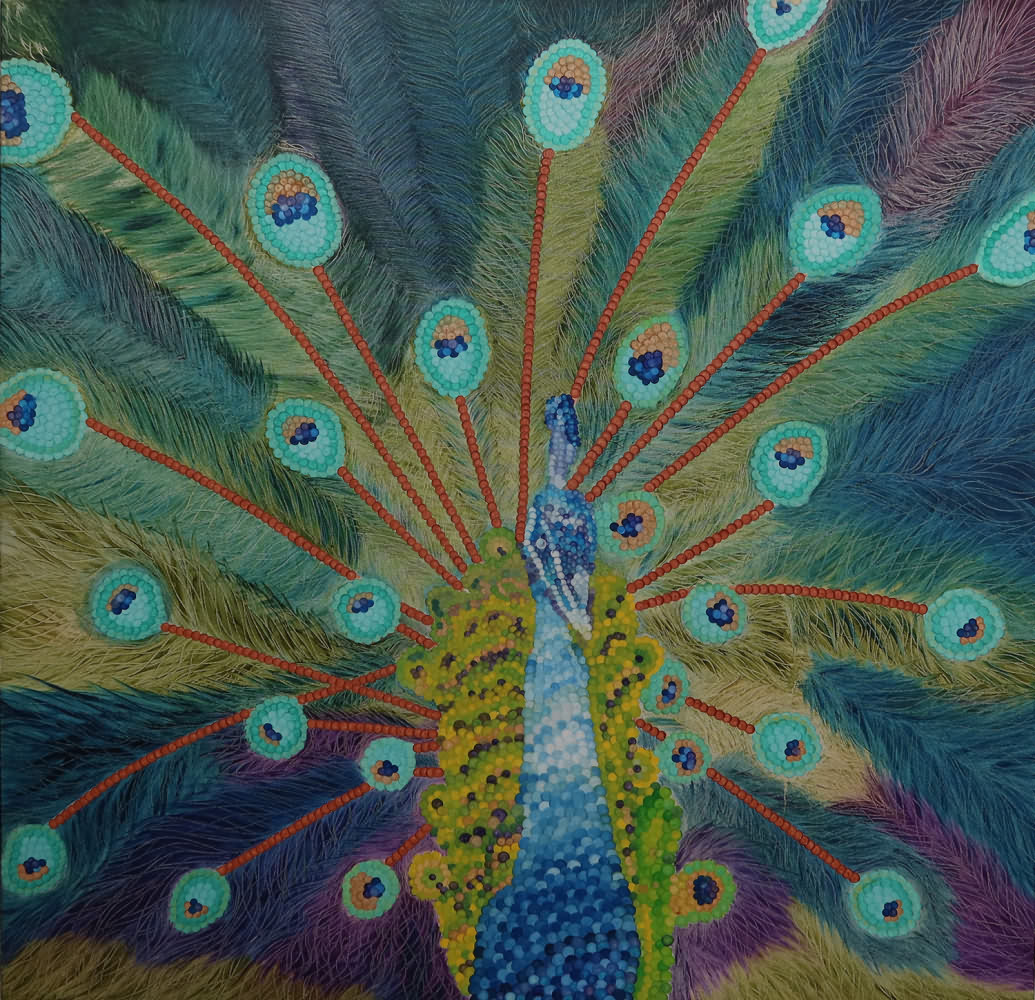
The painting titled The Peacock is a vibrant and dynamic composition that captures the majestic beauty of a peacock in full display. Lavinia’s Circleism technique is particularly prominent in this work, as the feathers and details of the peacock's plumage are rendered using circular patterns, giving the painting a mosaic-like effect. The vibrant use of colors—rich greens, blues, and turquoise tones—creates a striking visual impact, highlighting the grandeur of the peacock's fan-like tail.
Each feather is intricately detailed, with the eyespots of the peacock's tail feathers rendered in layers of color, emphasizing texture and depth. The red lines connecting the eyespots to the body suggest both the organic complexity of nature and a structural harmony, reinforcing a sense of symmetry and balance. The peacock’s body itself is a blend of cool blue tones, flowing gracefully into the more vibrant and colorful surrounding feathers.
The composition draws the viewer’s eye outward from the center, where the bird stands tall, symbolizing pride, beauty, and natural elegance. The use of Lavinia’s signature circular forms suggests not only the peacock's physical beauty but also a deeper connection to the cycles of nature and the concept of renewal, much like the bird’s association with regrowth and immortality in various mythologies.
The painting’s detailed textures, especially in the feathers, give it a tactile quality, making the viewer feel as though they can reach out and touch the feathers themselves. The contrast between the fine details and the bold colors creates a captivating visual experience, blending abstraction with nature.
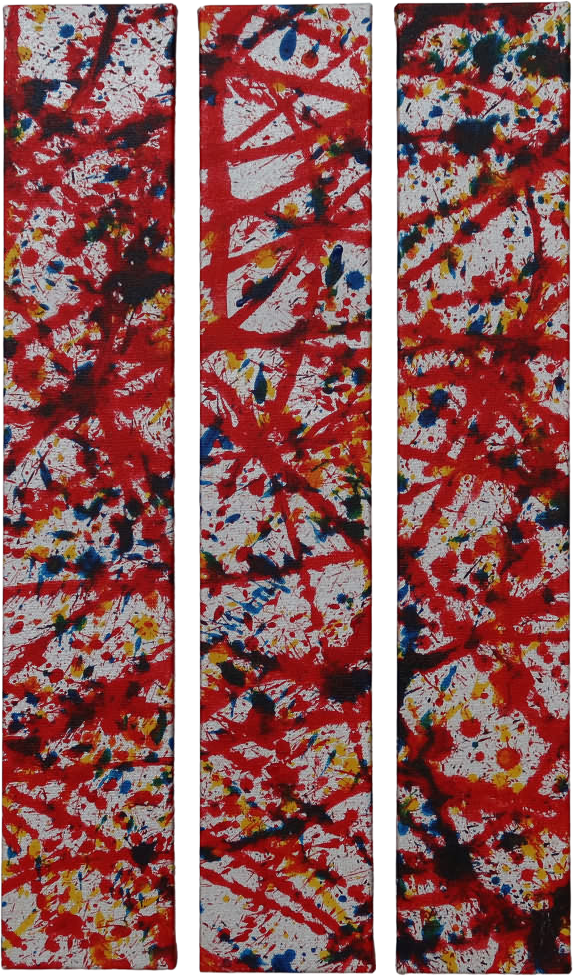
The painting Thinking of Pollock is an homage to the abstract expressionist artist Jackson Pollock, known for his signature drip and splatter techniques. This piece, divided into three vertical panels, captures the energy and chaos characteristic of Pollock’s work, but with a distinct interpretation. The dominant use of red splatters against the white background immediately evokes a sense of intensity and movement, with a strong emphasis on the dynamic flow of paint across the canvas.
The red splatters and drips crisscross the panels in a seemingly unstructured manner, yet they create a rhythm that guides the viewer's eye from one panel to the next, creating a cohesive triptych. The splashes of yellow, blue, and black that intermingle with the red introduce contrast and vibrancy, adding layers of complexity to the composition. These secondary colors break the dominance of red, creating a balance of chaos and order, which is further enhanced by the structural division into three panels.
This piece differs from Pollock’s work by introducing a greater sense of controlled chaos, with the triptych structure imposing a form of order that contrasts the spontaneous nature of the drips. While Pollock’s technique was more about freeform splattering, Lavinia's use of color and the arrangement of the panels introduce an element of intentionality, suggesting a dialogue between spontaneity and structure.
The painting reflects on Pollock's legacy of abstract expressionism while adding Lavinia’s personal touch through her careful color choices and compositional breakdown. The interplay between the bold, raw energy of the splatters and the calculated division of the work into panels invites the viewer to contemplate the balance between artistic freedom and constraint, much like Pollock himself grappled with during his career. Lavinia retain the energy and chaos of his abstract expressionism but balance it with order and purpose, making the work uniquely hers.
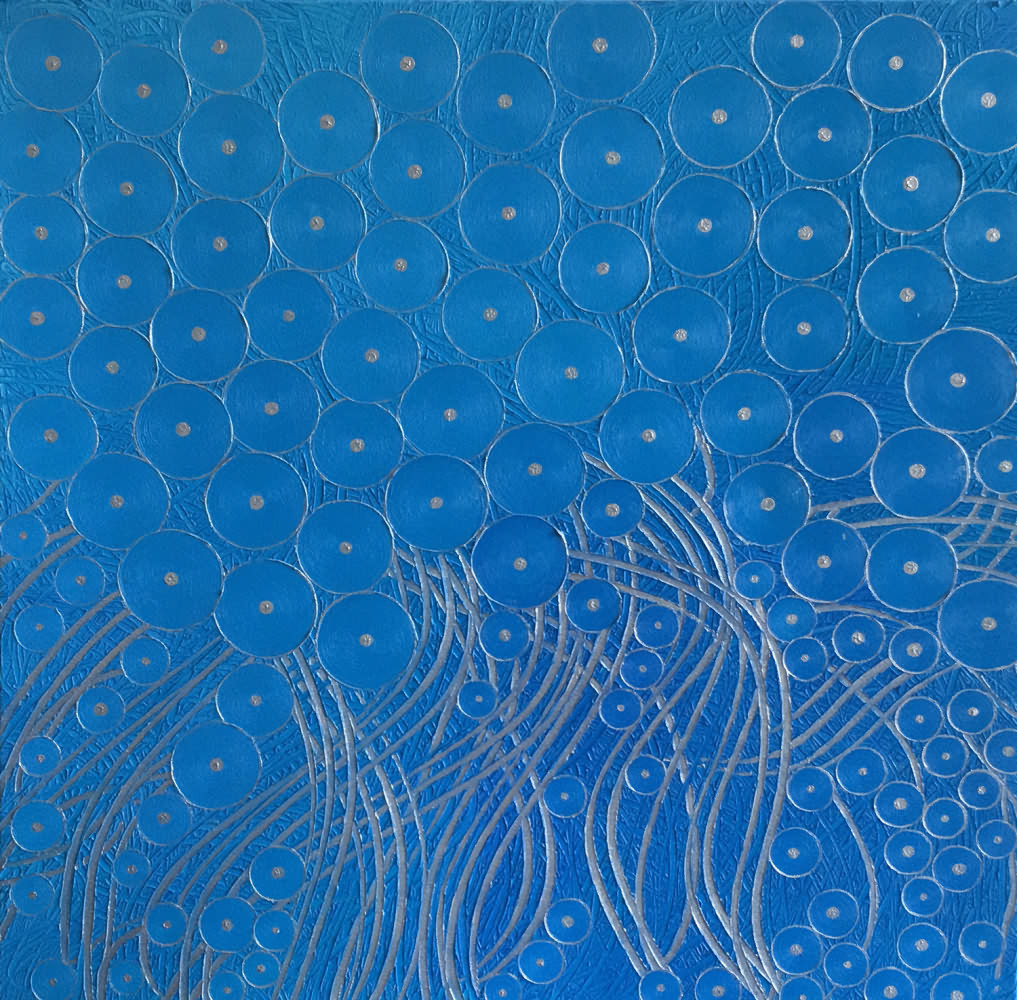
The painting titled Marine Life showcases Lavinia's signature Circleism technique, using a striking composition of circular patterns to evoke the vibrant, dynamic nature of the underwater world. The predominant blue palette immediately evokes the depths of the ocean, with various shades of blue giving the piece a sense of movement and flow, mimicking the currents and energy of marine life.
The larger circles at the top of the composition seem to represent bubbles or marine creatures rising to the surface, while the intricate, flowing lines that weave through the lower half of the painting symbolize the movement of water or aquatic plants gently swaying with the tides. These lines introduce a sense of fluidity and direction, guiding the viewer's eye downward through the composition, much like the ebb and flow of ocean currents.
The interplay between the large and small circles suggests different scales of life beneath the sea, from microscopic organisms to larger marine animals. The shimmering silver detailing within the lines and circles adds a reflective quality, reminiscent of light filtering through water, which gives the painting an almost ethereal, shimmering effect—mirroring how sunlight penetrates and diffuses in the ocean depths.
The circular forms in Marine Life create a sense of harmony and interconnectedness, reflecting the delicate balance of the marine ecosystem. The repetitive, rhythmic patterning of the circles also emphasizes the continuous cycle of life in the ocean, from the smallest forms of plankton to larger marine life. The abstract nature of the circles allows for multiple interpretations, whether they represent bubbles, fish, or other sea life, enhancing the painting's metaphorical depth.
The minimalist yet detailed approach in Marine Life not only captures the beauty of the ocean but also invites reflection on its complexities. The painting evokes a sense of calm, serenity, and endless movement, celebrating the mystery and richness of the ocean while also reminding us of its fragile ecosystem.